Money Spell Guide
Prosperity rituals, luck symbols & intention

Herbs for Money Spells: Basil, Bay, Cinnamon, Mint and More
The herbs most often used in money spells, what each one is associated with in folk tradition, and how to handle them safely at home.
Share your love
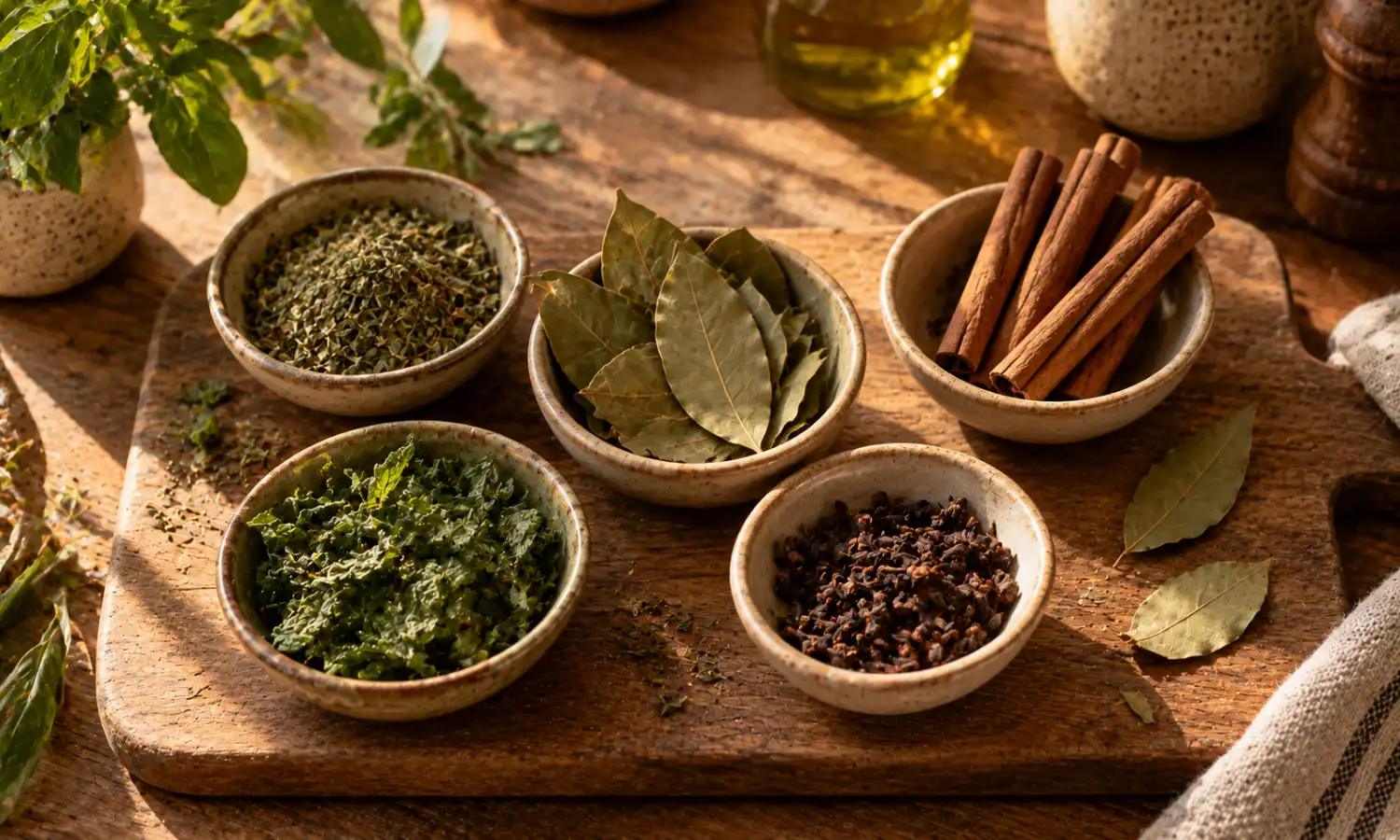
The most common money spell herbs are basil, bay leaf, cinnamon, mint, chamomile, clove, patchouli, alfalfa and clover. Most of them are already in your kitchen, which is part of why herb-based money practices have stayed popular: they are cheap, familiar and easy to use in a jar, a sachet, a wallet or beside a candle.
In folk tradition each herb carries an association. Basil and mint are commonly linked with wealth and freshness, bay with success, cinnamon with warmth and speed, chamomile with luck and calm. These meanings come from hoodoo, European kitchen magic, Wiccan correspondence tables and plain household custom, and they overlap more than they conflict.
This list explains what each herb is associated with, how people use it, and the handling rules that matter. One rule applies to all of them: in these practices, herbs are carried, placed, simmered for scent or burned safely. They are not eaten as part of the spell.
Every practice here is a symbolic, reflective exercise rooted in folk tradition. None is a proven method for producing money, and nothing here guarantees financial results.
Money spell herbs at a glance
| Herb | Associated with | How people use it | Handling note |
|---|---|---|---|
| Basil | Wealth and good fortune; sacred in Indian tradition | A pinch in a jar, dried leaves in a wallet, or a living pot on the windowsill | Keeping the plant alive is the practice |
| Bay leaf | Success, protection, clarity | Write one word on it; keep in a wallet, add to a jar, or burn safely | The only herb here commonly burned; one leaf at a time in a fireproof dish |
| Cinnamon | Warmth and speed; “quickening” an intention | A stick in a jar or wallet, a pinch on a dressed candle, or blown inward at the door | Handled, not eaten; keep ground cinnamon away from eyes and airways |
| Mint | Money, freshness, clearing stale energy | Dried mint in a sachet, leaves in a jar, fresh mint in a simmer pot | Sharp scent linked to clear thinking about finances |
| Chamomile | Luck, calm, gentle prosperity | Dried flowers in a sachet by the bed, or a simmer pot before a budget session | The spell use is the sachet, not the cup |
| Clove, patchouli, alfalfa, clover | Protection and attraction; grounding and material abundance; keeping the household from want; luck | Whole cloves in a pomander, a drop of patchouli oil on cotton, a jar of alfalfa in the pantry, a pressed clover in a wallet | Keep oils off skin and away from pets; whole cloves away from small children |
Key takeaways
- These are kitchen and garden herbs commonly associated with prosperity in Western folk practice, drawn from hoodoo, European folk magic, Wiccan correspondence tables and household custom.
- They are used in jars and sachets, in wallets, beside candles, in simmer pots for scent, or (bay only) written on and burned.
- Handle, do not ingest; burn only bay leaves in a fireproof dish; check for allergies and keep herbs, oils and sachets away from pets.
- Two or three herbs make a complete practice; none of them produces money.
- Turn making a sachet into a planning session: name one income source, write the single step that grows it, and set a date to take it.
How herbs are used in money practices
There are five common methods, and almost every herb below fits at least three of them. A sachet is a small cloth bag of dried herbs kept in a drawer, a bag or a wallet. A jar layers herbs with coins and a written intention. A simmer pot gently heats herbs and citrus peel in water on the stove for scent while you work. A candle dressing uses a tiny pinch of herb pressed onto an oiled candle. And burning applies mainly to bay leaves, written on and lit in a fireproof dish.
Across all of these, the herb gives an intention a scent, a texture and a place. A physical goal is harder to forget. Our kitchen-witch guide to herbs that attract money approaches the same list from the recipe side.
The herbs
Basil
Basil is commonly described as the herb of wealth in European and American folk practice, and it carries similar associations in Indian tradition, where holy basil is a sacred plant. Practitioners use dried basil in money jars and sachets, and a living basil plant on the kitchen windowsill is a popular everyday version. For living plants more broadly, see our guide to plants to attract money.
How to use it: a pinch in a jar, a few dried leaves in a wallet envelope, or a pot you tend daily. Keeping the plant alive becomes the practice. See our basil money spell for a full routine.
Bay leaf
Bay laurel is associated with success, protection and clarity, a reputation that traces back to the laurel wreaths of ancient Greece and Rome. It is the herb most often written on, since a dried leaf takes ink well.
How to use it: write one word on a leaf and keep it in a wallet, add it to a jar, or burn it in a fireproof dish with water nearby. Our guide on how to burn a bay leaf covers the safe method.
Cinnamon
Cinnamon is commonly described as a warming, quickening spice, used to “speed up” an intention. It appears in hoodoo money-drawing blends and in the popular first-of-the-month ritual of blowing cinnamon across the threshold.
How to use it: a stick in a jar or wallet, a pinch on a dressed candle, or ground cinnamon blown inward at the door. Cinnamon is handled, not consumed, in these practices, and ground cinnamon can irritate eyes and airways, so keep it low and away from your face.
Mint
Mint, especially peppermint and spearmint, is associated with money, freshness and clearing stale energy. Its scent is sharp and clean, which practitioners link with clear thinking about finances.
How to use it: dried mint in a sachet, a few leaves in a money jar, or fresh mint in a simmer pot.
Chamomile
Chamomile is commonly associated with luck, calm and gentle prosperity. In hoodoo it is sometimes described as a gambler’s herb, used for hand-washes before card games. In broader practice it is the herb for money anxiety rather than money ambition.
How to use it: a few dried flowers in a sachet kept by the bed or in a bag, or a chamomile simmer pot before a budget session. For drinking, use a food-grade chamomile tea as you normally would; the spell use is the sachet, not the cup.
Clove
Clove is associated with protection, prosperity and attracting good things. Its strong, warm scent makes it a frequent partner to cinnamon in money blends.
How to use it: a few whole cloves in a jar or sachet, or pressed into an orange as a pomander kept near the entrance. Whole cloves are sharp, so keep sachets away from small children.
Patchouli
Patchouli has a long association with money in hoodoo and in modern witchcraft, where its earthy, heavy scent is linked with grounding and material abundance. It is more often used as dried leaf or as a drop of essential oil than fresh.
How to use it: a pinch of dried leaf in a jar, or a drop of oil on a cotton ball tucked into a wallet. Keep essential oils off skin unless properly diluted, and away from pets.
Alfalfa
Alfalfa is commonly described in American folk practice as a herb that keeps the household from want. Practitioners often keep a small jar of it in the kitchen cupboard, which is as much a reminder to stock the pantry as it is a charm.
How to use it: a sealed jar in the pantry, or a pinch in a money jar. Dried alfalfa is sold as a culinary and tea herb; the spell use is simply keeping it on the shelf.
Clover
Clover, especially the four-leaf kind, is one of the most recognized luck symbols in the West. Dried red or white clover is associated with luck, prosperity and protection in Irish and broader European tradition.
How to use it: a pressed clover in a wallet, or dried clover in a sachet. A four-leaf clover found by chance is traditionally kept rather than used in a spell.
Handling and safety
Use culinary-grade dried herbs from a grocery store or reputable supplier. Store them in sealed jars away from light. Replace sachets and jar contents every few months, since dried herbs lose scent and can attract pantry pests.
Burn only bay leaves, one at a time, in a fireproof dish with water nearby, and never leave a flame unattended. Do not burn blends of loose herbs indoors; they smoke heavily and flare unpredictably. Keep herbs, oils and sachets away from pets, since several common plants are toxic to cats and dogs. If you have allergies, test a small amount first, and skip any herb that bothers you.
And again: these practices handle herbs. Eating a bay leaf or a spoonful of cinnamon is not part of any tradition we would recommend and can cause harm.
A practical pairing
Build one sachet with three herbs and treat the act of making it as a planning session. While you measure a pinch of basil, name one source of income you want to grow this month. With the bay leaf, write the single step that would grow it. With the cinnamon, set a date by which you will take that step.
Tie the sachet closed and put it in the bag you carry to work. Each time you notice it, check whether the dated step is done. The herbs hold the plan; the plan only matters if you act on it before you refresh the sachet.
Common questions
What herbs are best for money spells?
Basil, bay leaf, cinnamon and mint are the four most commonly used, and all four are easy to find. Chamomile, clove, patchouli, alfalfa and clover are frequent additions. A practice with two or three herbs is usually considered as complete as one with ten.
Can I use fresh herbs instead of dried?
Yes, for simmer pots, living plants and short-term uses. For jars and sachets, dried herbs last longer and do not mold. Fresh bay leaves are hard to write on and smoke heavily when burned, so use dried for those methods.
Where do I keep money herbs?
In a wallet, a desk drawer, a money jar on a visible shelf, or a sachet in the bag you carry daily. Some feng shui readers prefer the southeast area of a room. Visibility and daily contact matter more than direction.
Do I have to burn the herbs?
No. Bay leaf is the only herb on this list that is commonly burned, and even that is optional. Sachets, jars and simmer pots involve no fire at all. If you cannot burn anything safely where you live, our bay leaf intention ritual without burning is a good fire-free option.
Continue your practice
To put these herbs into a single simple practice, read our simple money ritual for beginners or the step-by-step money jar spell. For the writing side, intention journaling for work and opportunity pairs well with any sachet, and Start Here explains how we approach all of this.