Money Spell Guide
Prosperity rituals, luck symbols & intention

Basil Money Spell: The Herb of Wealth in Folk Tradition
Where basil's reputation for prosperity comes from, three traditional ways to use it, and a simple seven-step basil money spell you can tend daily.
Share your love
A basil money spell uses one of the most ordinary herbs in the kitchen as a symbol of wealth and welcome. In folk practice across the Mediterranean, the Caribbean and the American South, basil is commonly associated with prosperity, protection and good relationships. The simplest version of the spell is to keep a living basil plant by the door or the register and tend it as you would tend your finances.
This guide covers where basil’s reputation comes from, three ways people use it in money work (a living plant, a basil wash for the entrance, and a pocket sachet), and a short step-by-step practice you can do this week. None of it involves eating the herb; in these practices basil is grown, handled and placed, not consumed.
This practice is a symbolic, reflective exercise rooted in folk tradition; it is not a proven method for producing money and nothing here guarantees financial results. A basil plant on the windowsill will not pay a bill, but caring for it each morning can keep your money goals in view.
Basil money spell methods at a glance
| Method | What you need | How it is used | How to maintain or close |
|---|---|---|---|
| The living plant | A potted sweet basil plant, a sunny spot near the entrance or desk | Tend it daily; let its state mirror your attention to money | Water when dry, pinch the top, replace it if it dies |
| The basil wash | A handful of fresh leaves, a quart of hot water, a clean cloth | Steep, cool, strain; wipe the threshold, handle or counter from outside to inside | Discard the leftover wash outdoors or down the drain; never drink it |
| The pocket sachet | Three dried leaves, a coin, a folded intention, a square of cloth or small bag | Carry in a wallet or work bag, or keep with receipts | Refresh the leaves monthly; compost the old ones |
| Plant plus sachet (our version) | Plant, pot, coin, cloth, paper and pen | Write one sentence, pinch three leaves, assemble, then tend the plant each morning | 15 minutes to set up; under a minute a day |
Key takeaways
- Setup takes 15 minutes and daily tending about a minute; you need a basil plant or fresh leaves, a small pot, a coin, a square of cloth or small bag, and paper and pen.
- Basil’s reputation as the herb of wealth comes from Mediterranean doorstep custom and hoodoo shopkeeping practice; it is handled and placed, never eaten, in these spells.
- It is best for shops, home businesses, freelancers and anyone who likes a practice they can see growing.
- The purpose is to link daily care of a living thing with daily attention to your finances, so no plant pays a bill on its own.
- Pair the morning watering with a thirty-second look at your bank balance and pending transactions.
Why basil is called the herb of wealth
Basil’s association with prosperity is old and widespread. In parts of Italy and Greece, a pot of basil on the doorstep is traditionally described as a sign of welcome and good fortune for the household. In hoodoo, basil is often listed among the herbs for drawing money and keeping customers coming back; shopkeepers were advised to sprinkle a basil wash across the threshold.
In Hinduism, holy basil (tulsi) is a sacred plant tended daily in many homes, which is a different plant and a different tradition from the sweet basil used in Western folk magic. We mention it because the two are often confused online. The practices below use ordinary sweet basil, the kind sold in grocery stores.
Practitioners describe basil’s scent as the active part: bright, clean and a little peppery, it is said to lift the mood of a room and of the people in it. Whether or not you accept the symbolic claims, a fresh basil plant does make a space feel cared for, and cared-for spaces are easier to work in. Basil sits alongside bay, cinnamon and mint in our guide to herbs for money spells.
Three ways basil is used for money
The living plant
The most traditional form is also the easiest. Keep a basil plant near the entrance to your home or business, or on the desk where money is handled. Water it, pinch it back so it stays bushy, and let its state be a small mirror of how attentive you are being. A thriving plant means you have been showing up. A wilting one is a cue to check in on your budget as well as the soil.
The basil wash
A basil wash is water in which fresh basil leaves have been steeped and then cooled. In hoodoo and related practices, it is used to wipe down the threshold, the front step or the counter of a shop, with the stated intention of drawing customers and money across it. It is a cleaning task with meaning attached. The wash is for surfaces, not for drinking.
The pocket sachet
A few dried basil leaves, a coin and a folded intention in a small cloth bag make a portable version. People carry it in a wallet or a work bag, or tuck it in the drawer where they keep receipts. This is the form that travels well to interviews, sales meetings and market days. It is also the simplest introduction to folk money magic for someone who wants nothing on display at home.
A simple basil money spell, step by step
This version combines the plant and the sachet. It takes a quarter of an hour and uses nothing you cannot find at a grocery store.
- Get a basil plant. A small potted plant from the produce section is fine. If it is root-bound in a flimsy pot, move it into a slightly larger one with drainage. Doing this with care is the first act of the practice.
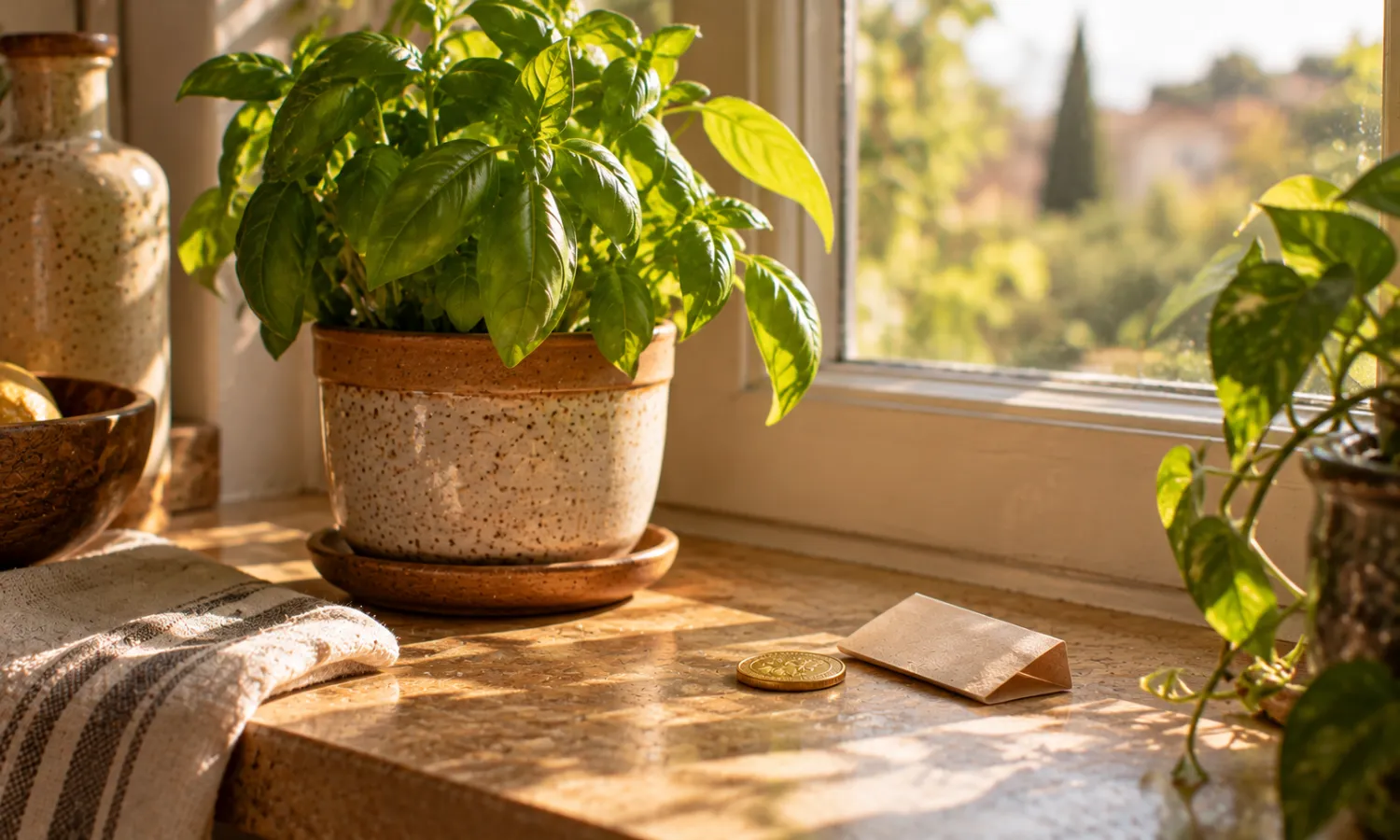
- Choose its place. Set it by the front door if you want it to greet what comes in, or on your desk if your money is mostly handled on a screen. It needs light; a sunny windowsill near the entrance is the classic compromise.
- Write a short intention. One sentence, present tense: “Customers find me and return.” “My freelance income is steady.” Fold the paper small.
- Pinch three leaves. Take them from the top of the plant, which also encourages it to grow fuller. Let them dry for a day on a saucer, or use them fresh if you plan to refresh the sachet weekly.
- Assemble the sachet. Place the leaves, a coin and the folded paper in a square of cloth and tie it closed, or use a small drawstring bag. Hold it for a moment and say your sentence aloud.
- Tend the plant daily. Each morning, water it if the soil is dry, turn it toward the light, and read your sentence in your mind. This is the whole daily ritual. It takes under a minute.
- Refresh monthly. Replace the leaves in the sachet with fresh ones from the plant once a month, or whenever your intention changes. Compost the old leaves.
Making a basil wash for the entrance
If you run a shop or work from a home with a front step, this older practice is worth trying once. Steep a handful of fresh basil leaves in a quart of hot water for ten minutes, strain, and let the water cool fully. Dip a clean cloth in it and wipe down the threshold, the door handle or the counter, moving from outside to inside.
While you wipe, say what you are inviting: “Good customers, fair pay, a welcoming door.” Discard the remaining wash outdoors or down the drain. Do not drink it, and keep it away from surfaces that water can damage.
Caring for basil so the practice lasts
Basil is a sun-loving annual. It wants six hours of light, water when the top inch of soil is dry, and regular pinching so it does not flower too early. Indoors in winter it tends to struggle, which is normal and not a sign of anything. If your plant dies, thank it, compost it and start a new one. Folklore does not treat a dead basil plant as a bad omen, and neither do we. If you would like to understand how a plant-based practice compares with candle or jar work, our explainer on money spells sets out what each kind of practice can and cannot do.
A practical pairing
The basil plant pairs naturally with a recurring money habit, because both need the same thing: a short daily check. When you water the plant each morning, open your banking app and look at your balance and your pending transactions. Thirty seconds, no judgment, just looking.
Most money problems grow in the dark. A daily glance keeps small issues small: the subscription you forgot to cancel, the invoice that has not been paid, the balance that is lower than you assumed. The plant is the cue; the glance is the practice.
Common questions
Does basil really attract money?
There is no evidence that basil affects anyone’s finances, and we do not claim it does. Its role in a money spell is symbolic: it gives you a living reminder of a goal and a daily reason to pay attention. The attention is what has a chance of changing your situation.
Can I use dried basil from the spice rack?
Yes, for a sachet. Dried culinary basil from a jar works fine as a symbolic ingredient, though many practitioners prefer leaves from a plant they have tended. For a wash, fresh leaves give a much stronger scent and are the traditional choice.
Should I eat the basil leaves from a money spell?
No. In these practices basil is handled and placed, not eaten. Leaves that have sat in a sachet with a coin are not food. If you want to cook with basil, keep a separate culinary plant, or simply harvest from the plant before it is used in any practice.
Where should I put a basil plant for money?
Near the entrance is the traditional spot in Mediterranean and hoodoo practice, because it greets what comes in. Feng shui practitioners often point to the wealth corner, the far-left area of the home from the front door. Light matters more than any of this: a basil plant in a dark corner will not survive, so choose the sunniest spot that is also somewhere you will see it. Our guide to plants to attract money compares basil with jade, pachira and lucky bamboo.
Continue your practice
Basil is one of several herbs people use this way; see our full list of herbs that attract money for the others. If you would like a gentle routine to go with your plant, start with the simple money ritual for beginners or the bay leaf intention ritual without burning. New to the site? Read Start Here first.