Money Spell Guide
Prosperity rituals, luck symbols & intention

The Cinnamon Money Ritual: Blowing Cinnamon on the First of the Month
How to do the first-of-the-month cinnamon money ritual at your front door, what to say, and the budget habit that makes it worth keeping.
Share your love
The cinnamon money spell is simple: on the first day of the month, you stand at your front door facing into your home, hold a small amount of ground cinnamon in your palm, say a short intention for the month ahead, and blow the cinnamon inward across the threshold. It takes about a minute, and most people follow it with a quick sweep.
The ritual spread widely through social media over the past few years, but it draws on much older folk associations. Cinnamon has long been described as a warming, “quickening” spice in European and American folk practice, and the threshold of a home has been a symbolic boundary in almost every culture.
Below you will find the steps, the words people use, a bit of background, the cleanup, and the practical habit we recommend attaching to it so the first of the month becomes a real money check-in.
This practice is a symbolic, reflective exercise rooted in folk tradition. It is not a proven method for producing money, and nothing here guarantees financial results.
Cinnamon money ritual at a glance
| Variation | What you need | When | How to close |
|---|---|---|---|
| Classic threshold blow | Half to one teaspoon of ground cinnamon, your own front door | Morning of the first of the month | Close the door, pause, sweep or vacuum within the hour |
| With a bay leaf | The above plus a dried bay leaf, a pen and a fireproof dish | Same morning | Burn the leaf safely in the dish or tuck it into a wallet |
| Cinnamon stick in a jar or wallet | One cinnamon stick, a money jar or wallet | Any day; lasts the whole month | Replace the stick when the next month begins |
| Dish by the door (no blowing) | A pinch of cinnamon, a small dish | Shared entryways, homes with crawling babies | Say the words, sprinkle into the dish, empty it when you next clean |
| Paired budget review | Your bank or budgeting app, a notebook | Right after you sweep | Answer three questions and write them under the date |
Key takeaways
- The whole ritual takes one to two minutes plus a minute to sweep, using a teaspoon of ground cinnamon, your front door and a small brush or vacuum.
- It is best for starting the month with a clear intention and a reason to look at your budget; the purpose is a monthly threshold ritual that welcomes the month in.
- Blow inward, aimed low, never at your face or anyone nearby; cinnamon is handled, not eaten, and should be skipped if you have an allergy or a respiratory condition.
- The practice is a modern folk ritual built on older spice and threshold symbolism; it does not produce money.
- Attach a 15-minute budget review, or one smaller task such as confirming a savings transfer, so the date becomes a real money check-in.
Where the cinnamon ritual comes from
Cinnamon appears in folk magic across many traditions. In hoodoo it is commonly listed among money-drawing and “fast luck” ingredients. In European kitchen magic it is associated with warmth, success and speeding things along. In feng shui and Chinese custom, warm spices and the color of cinnamon are linked to prosperity and energy. We cover cinnamon alongside basil, bay and mint in our guide to herbs for money spells.
The specific practice of blowing cinnamon across the doorway on the first of the month is more recent, at least in its current form, and is often described online as a Mexican or Latin American household custom. We have not found a firm historical source for that attribution, so we would describe it as a modern folk ritual that borrows from older threshold and spice symbolism. That is typical of the practices we describe in our beginner’s guide to money magic.
The threshold itself is the key image. Doorways have been treated as the boundary between outside and inside, public and private, for as long as homes have had doors. Blowing something good inward is an old, intuitive gesture.
What you need
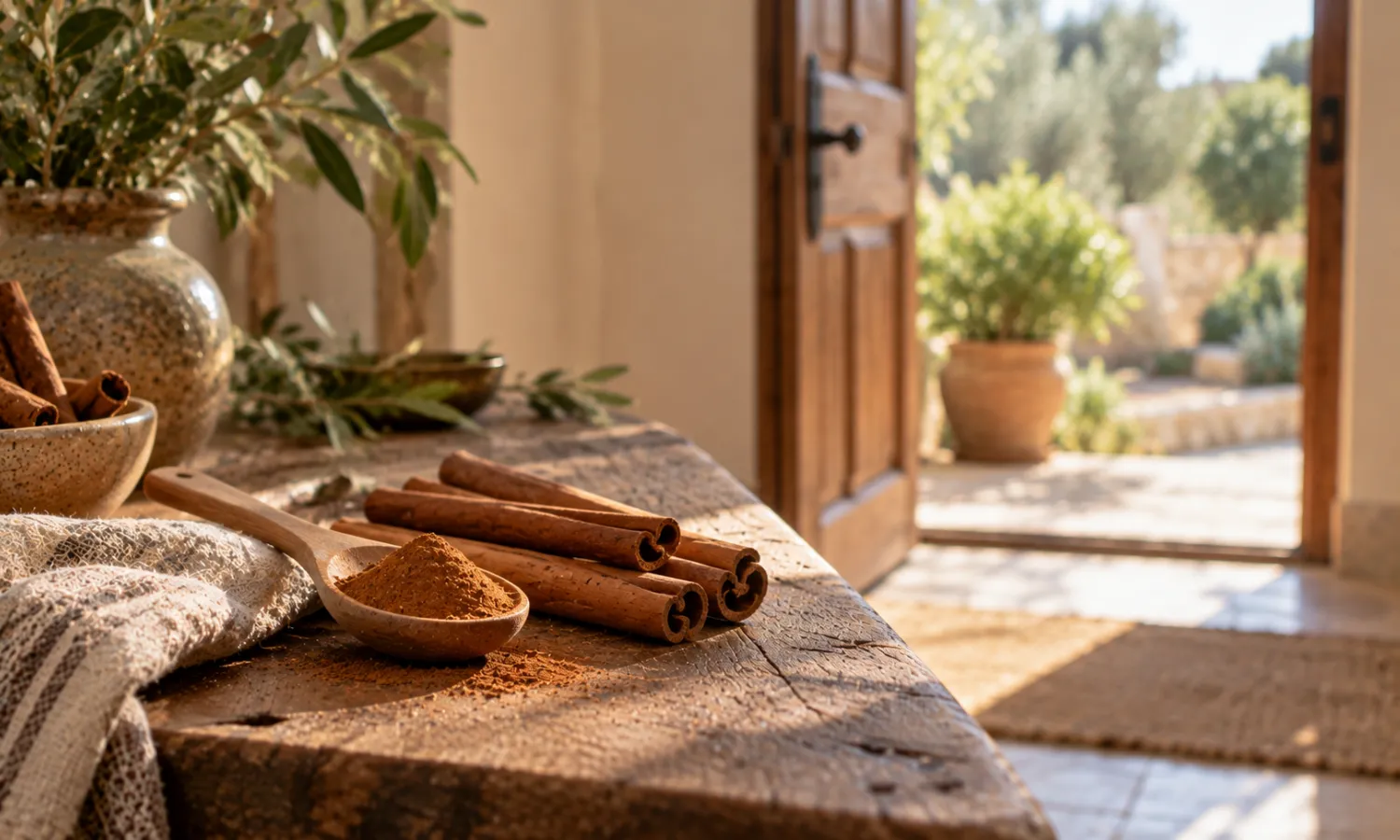
Ground cinnamon from the spice aisle. Half a teaspoon to a teaspoon is plenty; more just makes a mess. Cassia cinnamon, the common kind in American stores, works fine. You do not need a special variety.
You need a doorway you consider the main entrance. For apartment dwellers this is your own front door, not the building’s. If you share a hallway, keep the cinnamon inside your own threshold and sweep promptly.
Keep in mind that cinnamon is handled in this practice, not eaten. Blowing a pinch of spice is safe for most people, but avoid inhaling it directly, keep it away from your eyes, and skip the ritual if you have a cinnamon allergy or a respiratory condition that fine powders aggravate.
How to do the cinnamon money spell, step by step
- Pick the morning of the first. Most people do it early, before leaving the house. If you miss the first, the next morning is fine; the date is a frame, not a rule.
- Open the front door and stand just outside or on the threshold, facing in. You are welcoming the month into the home, so the direction matters more than the exact spot.
- Place a small amount of cinnamon in your dominant hand. Hold it in a loose, open palm.
- Say the intention. Out loud if you can, quietly if neighbors are near. A common form is: “When this cinnamon blows, prosperity and abundance come into this home for the month ahead.” Adapt it to your own words.
- Blow the cinnamon inward. One steady breath, aimed low and into the home. Do not blow it at your face or toward anyone standing nearby.
- Close the door and pause. Take a breath, notice the smell, and let the moment settle for a few seconds.
- Sweep or vacuum. Within an hour, clean up the cinnamon. Some traditions say to leave it for a day; we think a clean floor is a better sign of a cared-for home. Cinnamon can stain light rugs if ground in, so do not wait too long.
- Do the paired money task. See the section below. This is what turns a minute of symbolism into a monthly habit.
Words and intentions people use
The traditional phrasing online is some version of “when this cinnamon blows, prosperity will come.” Many people prefer something more specific and more honest. A few examples readers have shared:
“This month I welcome steady work and clear thinking about money.” “I bring warmth and enough into this home.” “May this month hold what we need, and may I notice it.”
Write your own in advance so you are not improvising at the door. One sentence is enough. If the month has a particular goal, such as finishing a project, paying off a card or saving for a trip, name it directly.
Variations
Some people add a bay leaf: write the month’s intention on a leaf, blow the cinnamon, then burn the leaf safely in a fireproof dish or tuck it into a wallet. We have a full guide on how to burn a bay leaf if you go that route.
Others place a cinnamon stick in a money jar or wallet instead of blowing powder, which is tidier and lasts all month. A cinnamon stick on the desk or by the door works the same way.
If blowing powder is not practical, such as in a shared entryway or a home with a crawling baby, hold the cinnamon, say the words, and then sprinkle it into a small dish by the door. The gesture is the point. Some people also do a quick salt ritual at the threshold first, clearing the space before inviting anything in.
A practical pairing
Attach a 15-minute budget review to the ritual, every month, right after you sweep. Open your bank or budgeting app and answer three questions: What came in last month? What went out, and what were the three largest items? What is one thing I will change this month?
Write the answers in a notebook under the date. Over a year, you will have twelve pages that show exactly what happened and what you decided, which is a record most people never keep. The cinnamon gets you to the table. The review is what changes the numbers.
If a budget review feels like too much, choose one smaller task: confirm your automatic savings transfer, cancel one unused subscription, or pay one bill early. Any of these counts.
Common questions
What do you say when you blow cinnamon for money?
The most common phrase is “When this cinnamon blows, prosperity and abundance come into this home.” You can use your own words. A specific, honest sentence about the month ahead, such as “This month I welcome steady work and clarity,” tends to be more useful than a grand one.
Do you blow cinnamon in or out of the house?
Inward. You stand at the threshold facing into your home and blow the cinnamon in, as a way of welcoming the month and its good things inside. Blowing outward is sometimes used in release practices, but that is a different ritual.
Do you leave the cinnamon on the floor?
Traditions differ. Some say leave it for 24 hours; many people sweep within the hour. We suggest cleaning up promptly, both for the floor and because a tidy entrance is itself a good sign of a cared-for home. The symbolism is in the gesture, not in the powder sitting there.
Can I do the cinnamon ritual on any day?
Yes. The first of the month is the usual choice because it creates a monthly rhythm, but people also do it on a new moon, a birthday, or the first day in a new home. Consistency matters more than the specific date.
Continue your practice
If you would like a short practice for the rest of the month, our simple money ritual for beginners fits easily alongside this one, and intention journaling for work and opportunity is a good place to keep your monthly review notes. For other household money practices, see our list of money rituals people practice at home, and visit Start Here for our approach.