Money Spell Guide
Prosperity rituals, luck symbols & intention

Pixiu Meaning: The Chinese Wealth Guardian and How to Wear It
What the pixiu symbolizes in Chinese folk tradition, how people wear and place it, and the myths worth letting go of.
Share your love
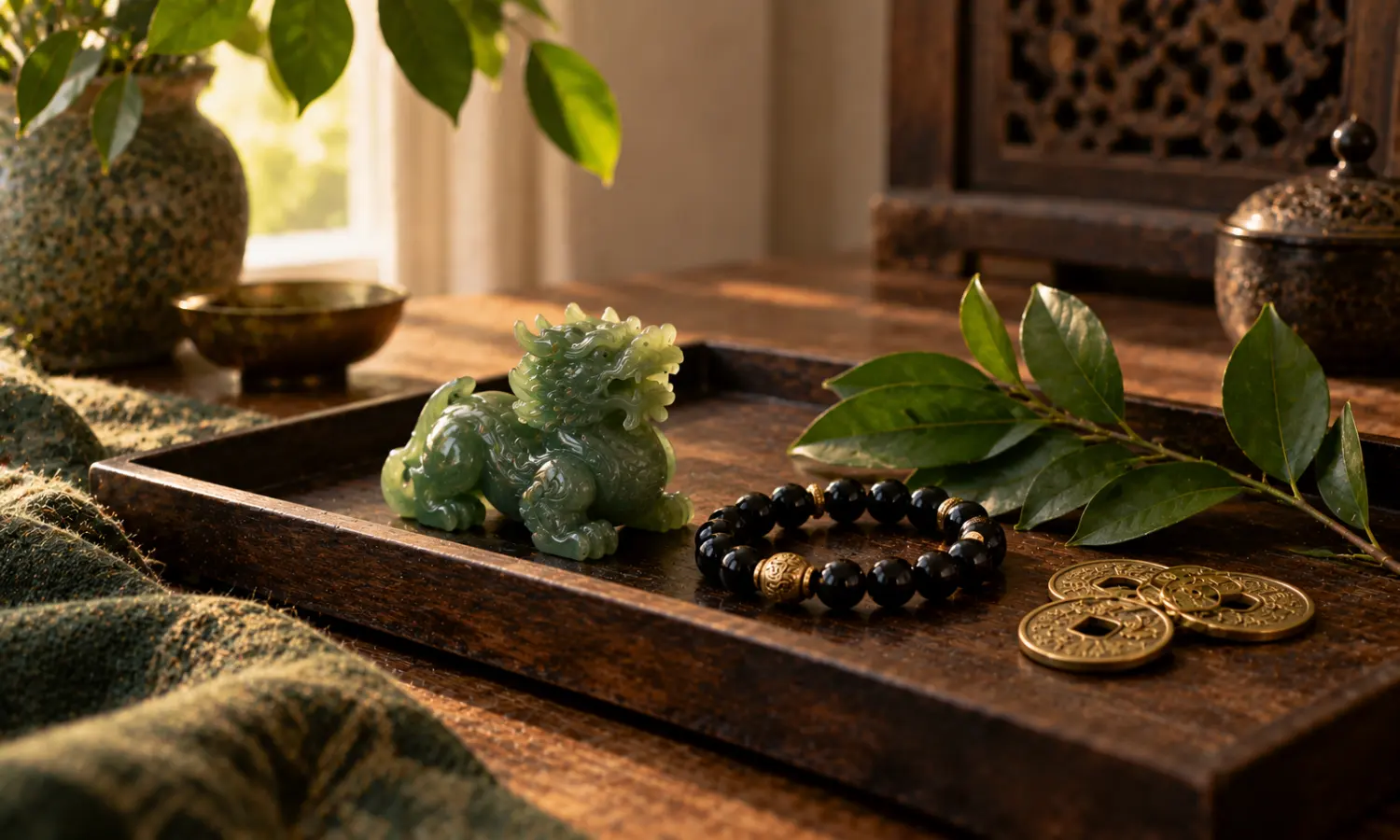
Pixiu meaning, in short: the pixiu is a winged, lion-like creature from Chinese mythology that is said to attract wealth and, crucially, to keep it from slipping away. In feng shui and folk practice it is worn as a bracelet charm or placed as a statue facing the door to guard a household’s money.
You may also see the name written as pi xiu, pi yao or bixie. The pixiu is often described as having a dragon-like head, a strong four-legged body and sometimes small wings, with a big appetite for gold and silver.
Below we explain where the symbol comes from, what the common variations mean, how people wear and place it today, and the myths that tend to cause confusion.
This is folklore and personal belief, not a predictor of money or events; nothing here guarantees luck or financial results. Treat a pixiu as a cultural symbol and a daily reminder of your financial intentions, not as a financial strategy.
Pixiu meaning at a glance
| Variant | Common meaning | Tip |
|---|---|---|
| One horn | Often linked to attracting wealth | Choose it if your focus is new income or opportunities |
| Two horns | Often linked to keeping and protecting wealth | Choose it if your focus is saving and steadiness |
| Pair of pixiu | Balance of earning and keeping, often sold as a couple | Place them side by side, both facing outward |
| Obsidian bracelet | Protection and grounding with a wealth symbol | Wear it so the head faces outward, away from your body |
| Jade statue | Harmony, good fortune and longevity in Chinese culture | Place it facing the main door or a window with a pleasant view |
| Gold-tone charm | Prosperity and the creature’s love of gold | Keep it clean and polished as a sign of care |
Key takeaways
- The pixiu is a mythical Chinese creature associated with gathering and guarding wealth.
- Folklore says it eats gold and silver but never lets them out, which is why it symbolizes keeping money.
- People wear pixiu bracelets or place statues facing the door, outward from the home or desk.
- One-horned and two-horned forms are commonly linked to attracting and keeping wealth, respectively.
- It is best treated as a meaningful reminder of good money habits, not as a guarantee.
Origins of the pixiu
The pixiu belongs to a family of protective beasts that appear in Chinese art and legend for well over a thousand years. Carved stone guardians resembling winged lions stand near ancient tombs and palaces, and later traditions connected these creatures to protection against harmful forces.
Over time, popular stories gave the pixiu a particular character. In one widely told legend, it was a favored creature in the heavenly court that broke a rule and was punished in a way that meant it could eat but not eliminate. From that story comes the folk image of a creature that takes in treasure and never lets it go.
Whatever the exact history, the modern meaning is clear: in Chinese folk belief and feng shui, the pixiu stands for bringing wealth in and keeping it safe. It sits alongside other prosperity emblems described in our guide to Chinese symbols for prosperity.
What the pixiu symbolizes
The pixiu carries two linked ideas. The first is attraction: its fierce appetite for gold and silver is said to draw wealth toward its owner. The second is retention: because it never releases what it eats, it symbolizes savings that stay put.
Many people value this second meaning most. A charm that reminds you to hold on to what you earn speaks directly to the habits that build financial security, such as spending less than you make and keeping an emergency fund.
The pixiu is also described as a guardian. Its fierce face and strong stance suggest protection of the home and of the people who live there, which is why it is often placed near entrances.
Variations by horns, material and color
One horn or two
Older descriptions sometimes say that the one-horned creature was called pi and the two-horned one xiu, and some sellers describe them as male and female. In everyday practice, the one-horned form is commonly linked to attracting wealth and the two-horned form to keeping it. Many people buy a pair to cover both.
Common materials
Obsidian is the most popular material for bracelets, often with a small gold-tone pixiu bead at the center. Jade, which carries deep cultural meaning in China, is a common choice for statues. You will also find pixiu in brass, gold, silver, citrine and wood. If you enjoy stones, our guide to crystals for money describes how citrine and other stones are used in prosperity practice.
Color
Gold and yellow tones echo wealth, green and jade tones suggest growth and harmony, and black obsidian is associated with protection and grounding. There is no single correct color; choose the one whose meaning resonates with your intention.
How people use the pixiu today
Wearing a pixiu bracelet
The most common approach is a bead bracelet worn on the left wrist, which some feng shui teachers describe as the receiving hand. The pixiu bead usually faces outward, with its head pointing away from your body, as if it is going out to gather wealth for you. Many people take it off before showering, swimming or sleeping, to keep the bracelet in good condition.
Placing a pixiu statue
At home, a pixiu is usually placed so it faces the main door or a window, looking outward. On a desk, it can face the office door. Practitioners generally advise against pointing it directly at a person, at a bed, or at a mirror, and suggest placing it at about table height rather than on the floor. Some people place it in the wealth area of a room, which our guide to finding your feng shui money corner explains in detail.
Care and cleansing
Owners often wipe their pixiu with a soft cloth, set it in sunlight or moonlight, or pass it through incense smoke as a symbolic cleanse. If you use incense, keep it in a proper holder, ventilate the room and never leave it burning unattended. Some people also speak a short intention when they first wear or place the pixiu.
Common misconceptions
A frequent myth is that a pixiu will bring money on its own, regardless of what you do. Within the tradition itself, the creature is a helper, not a replacement for work, saving and prudent choices.
Another is that it is dangerous or unlucky to own one “wrongly.” Sellers sometimes warn that the wrong placement will cause loss. There is no reason to fear a decorative symbol. If a rule does not feel meaningful to you, you are free to set it aside.
Finally, some people think any winged lion figure is a pixiu. Chinese art includes several related guardian beasts, such as qilin and foo dogs, each with their own meaning. Buying from a knowledgeable seller, and asking what tradition a figure comes from, helps you know exactly what you are bringing home.
A practical pairing
The pixiu’s signature trait is keeping wealth, so pair it with the most practical form of that idea. This week, set up an automatic transfer of a fixed amount into a separate savings account on the day after payday. Even a small amount counts.
Each time you notice your pixiu bracelet or statue, let it be a two-second check: did I spend on purpose today? Over months, that small habit does more for your balance than any charm, and the charm becomes a friendly reminder of a promise you are keeping.
Common questions
What does it mean when someone gives you a pixiu?
In Chinese folk tradition, a pixiu gift is a wish for your prosperity and protection. Many people consider it especially meaningful as a business opening or housewarming gift.
Can anyone wear a pixiu bracelet?
Yes. You do not need a particular faith or background to wear one. It is respectful to learn a little about the symbol’s Chinese roots and to wear it with appreciation rather than as a novelty.
Which hand should I wear a pixiu bracelet on?
Many feng shui guides recommend the left hand, described as the receiving side, with the pixiu’s head facing outward. This is a tradition rather than a rule, so comfort matters too.
Is it true that others should not touch your pixiu?
Some practitioners believe a pixiu bonds with its owner and prefer that others not handle it. This is a personal belief, and there is no need to worry if someone touches it by accident.
Continue your practice
If the pixiu appeals to you, you may also enjoy our guide to the feng shui money frog, another classic wealth guardian. For more charms that fit in a wallet or pocket, explore our list of lucky symbols for money.