Money Spell Guide
Prosperity rituals, luck symbols & intention

Herbs That Attract Money: A Kitchen-Witch Prosperity Guide
A kitchen-witch guide to herbs that attract money in folk tradition: basil, bay, cinnamon, mint and more, with safe, simple ways to use them.
Share your love
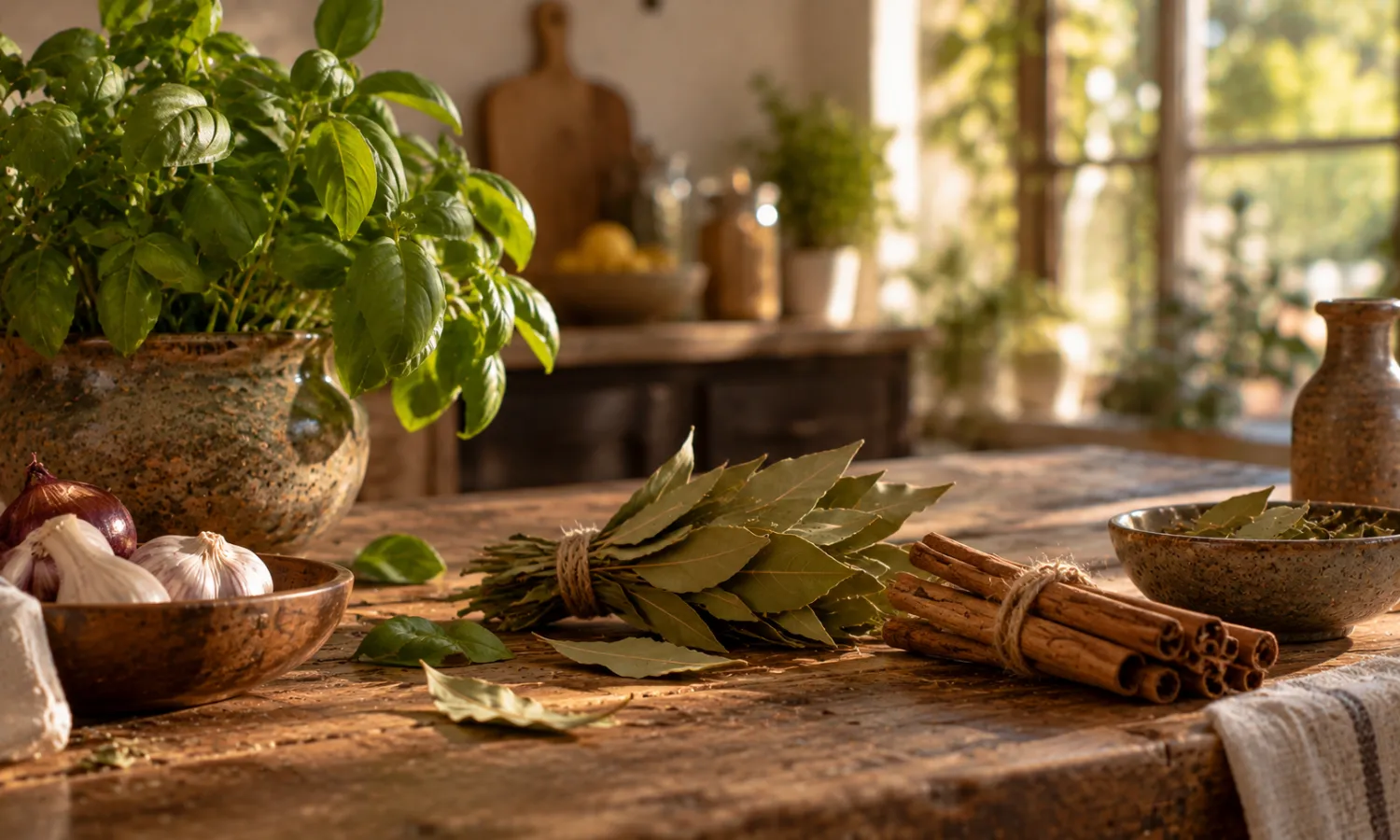
Herbs that attract money, in kitchen-witch and folk tradition, are the common plants long associated with prosperity: basil, bay, cinnamon, mint, chamomile, clove, and a few others you probably already have in a cupboard. People keep them in sachets, place them in money bowls and jars, write intentions on their leaves, or simply grow them on a windowsill.
This guide covers eleven herbs, the lore commonly attached to each, and the safe, simple ways practitioners use them. A note on safety up front: in these practices the herbs are handled, carried and displayed, not eaten or brewed for prosperity, and anything involving flame needs care.
Herb lore belongs to folk tradition and personal belief; working with these plants is a reflective practice, not a proven method for producing money, and nothing here guarantees financial results.
Money herbs at a glance
| Herb | Tradition | Association | Common use |
|---|---|---|---|
| Basil | Mediterranean household custom; hoodoo | Wealth; inviting customers | Pot by the door, leaf in a wallet or cash drawer |
| Bay leaf | Ancient Mediterranean; European folk magic | Success and victory | Written intention kept behind the cards or burned safely |
| Cinnamon | Hoodoo; modern practice | Fast-moving luck and prosperity | Doorway sprinkle on the first of the month; stick in a jar |
| Mint | European folk tradition | Money that grows | Dried leaves in a wallet or sachet; a windowsill plant |
| Clove and nutmeg | Hoodoo; European folklore | Prosperity, protection, luck | Three cloves in a jar; a whole nutmeg in the pocket |
| Chamomile and clover | Gambling folklore; prosperity sachets | Luck, calm, steady increase | Dried flowers and leaves in a sachet |
Key takeaways
- These are everyday herbs that European folk magic, hoodoo, Mediterranean custom and modern kitchen witchery associate with wealth, luck and growth.
- People use them in sachets, jars, bowls, written leaves, doorway sprinkles and windowsill plants.
- Handle, do not ingest, and keep dried herbs and sachets well away from flame, children and pets.
- A living basil or mint plant is the simplest and most forgiving way to work with money herbs.
- No herb produces money; tie watering the plant to a small automatic transfer, or the sachet refresh to a subscription review.
The core prosperity herbs
1. Basil
Basil is often described as the herb of wealth in Mediterranean and hoodoo practice. Shopkeepers were said to keep a pot by the door to invite customers, and a leaf tucked in a wallet or cash drawer is a common charm. A living basil plant on the kitchen windowsill is the simplest way to work with it, and it is a pleasant thing to tend.
2. Bay leaf
Bay laurel was the crown of victors in the ancient Mediterranean, which is where its association with success comes from. Today people write a short intention on a dried leaf and either keep it or burn it. If you burn one, use a fireproof dish, keep water nearby, and expect it to flare quickly. Our guide on how to burn a bay leaf safely covers the details.
3. Cinnamon
Warm, fragrant cinnamon is linked with fast-moving luck and prosperity in hoodoo and in many modern practices. The best-known use is blowing a pinch of ground cinnamon through the front door on the first of the month, which we walk through in the cinnamon money ritual. Sticks are placed in jars and bowls. It is handled, not consumed, in this context, and ground cinnamon should be kept away from eyes.
4. Mint
Mint’s quick growth and fresh scent made it a symbol of money that “grows” in folk tradition. A few dried leaves in a wallet or a sachet is the classic use, and a mint plant is nearly impossible to kill, which makes it a forgiving choice for beginners. For more living options, see our guide to plants to attract money.
Supporting herbs and spices
5. Chamomile
Chamomile is associated with luck, particularly in gambling folklore, and with calm. Practitioners describe it as a gentle herb for people whose money trouble is mostly anxiety. Dried flowers go into sachets and jars.
6. Clove
Cloves are linked with prosperity and protection, and with stopping gossip in hoodoo lore, which makes them a favorite for business owners. Three whole cloves in a money jar is a common addition.
7. Ginger
Ginger is often described as a “quickening” herb that speeds up whatever it is added to. A small piece of dried root in a sachet is said to hurry things along. Practitioners pair it with slower herbs like bay.
8. Nutmeg
A whole nutmeg carried in the pocket is an old luck charm, especially for games of chance. It is associated with money and good fortune in both European and hoodoo traditions. Keep it whole and uncracked.
Green and growing herbs
9. Clover
Beyond the famous four-leaf variety, ordinary dried clover is associated with luck and steady increase. It is a common ingredient in prosperity sachets and is easy to gather from a lawn.
10. Patchouli
Earthy patchouli is linked with money and grounding in hoodoo and in modern witchcraft. Dried leaves are used in sachets and the oil is sometimes used to dress green candles. Handle oils with care and wash hands before lighting anything.
11. Alfalfa
Alfalfa is an old protection-against-want herb in American folk practice. A jar of dried alfalfa in the pantry was said to keep the household from going hungry. It is a quiet, practical symbol of having enough.
Simple ways to use money herbs at home
- A prosperity sachet. Put a pinch each of basil, mint and chamomile, one bay leaf and three cloves into a small green or gold cloth bag. Tie it, say your intention once, and keep it in a bag or desk drawer. Refresh it every month or two.
- A written bay leaf. Write one specific goal on a dried bay leaf and tuck it behind your cards. Replace it when it crumbles.
- A windowsill plant. Grow basil or mint in the kitchen. Each time you water it, say the goal. This is the one practice that also gives you fresh herbs for dinner, which is a separate matter from the symbolism.
- A money jar or bowl. Add a cinnamon stick, a bay leaf and a few cloves to coins in a jar. See our money jar spell for the full method.
- A doorway sprinkle. On the first of the month, blow a small pinch of ground cinnamon from the outside of your front door inward. Sweep up afterward; the gesture is the point.
Safety and respect
Dried herbs are flammable, so keep sachets and loose leaves well away from candles, and never burn anything except in a fireproof dish with water at hand and a window open. Do not eat or brew herbs as a prosperity practice; the culinary and symbolic uses are separate, and some of these plants are not safe in quantity. Keep sachets away from small children and pets. For how herbs fit into the wider folk tradition, our beginner’s guide to money magic is a good starting point.
Several of these associations come from hoodoo, an African American folk tradition with its own history and community. We describe its practices with respect and encourage reading our hoodoo money work explainer for context before borrowing from it.
A practical pairing
Herbs grow, and so do small habits. Our suggestion is to tie the windowsill plant to a savings habit: every time you water the basil, move a small fixed amount, five or ten dollars, into a separate account. Watering twice a week becomes forty to eighty dollars a month without a single difficult decision.
If you prefer the sachet, use its monthly refresh as a cue to review subscriptions and cancel one you no longer need. The herb marks the moment; the review is where the money actually moves.
Common questions
What is the most powerful herb for money?
Basil, bay and cinnamon are the three most often named across traditions. None has any measurable effect on finances; the most useful herb is the one you will actually see and handle regularly, which for most people is a living basil or mint plant.
Can I use fresh herbs instead of dried?
Yes for plants and bowls, but fresh herbs mold in sachets and jars within days. For anything sealed or carried, use dried. A dried bay leaf is also far easier to write on than a fresh one.
Where should I keep money herbs in the house?
Common spots are the kitchen windowsill, near the front door, in a wallet or purse, on a desk, or in the feng shui wealth corner, the far left of the home from the entrance. Choose somewhere you will notice it. Avoid the bathroom and anywhere near the stove’s open flame.
Do I need to cleanse or charge the herbs?
Practitioners often hold the herbs and state an intention before using them, which is what charging means in this context. It takes ten seconds and is mostly a way of making the practice deliberate rather than automatic.
Continue your practice
Start with the bay leaf intention ritual without burning if you want a flame-free first step, or the simple money ritual for beginners for a short routine. For herb-by-herb depth, read our guide to herbs for money spells and the basil money spell. New to the site? Begin at Start Here.