Money Spell Guide
Prosperity rituals, luck symbols & intention
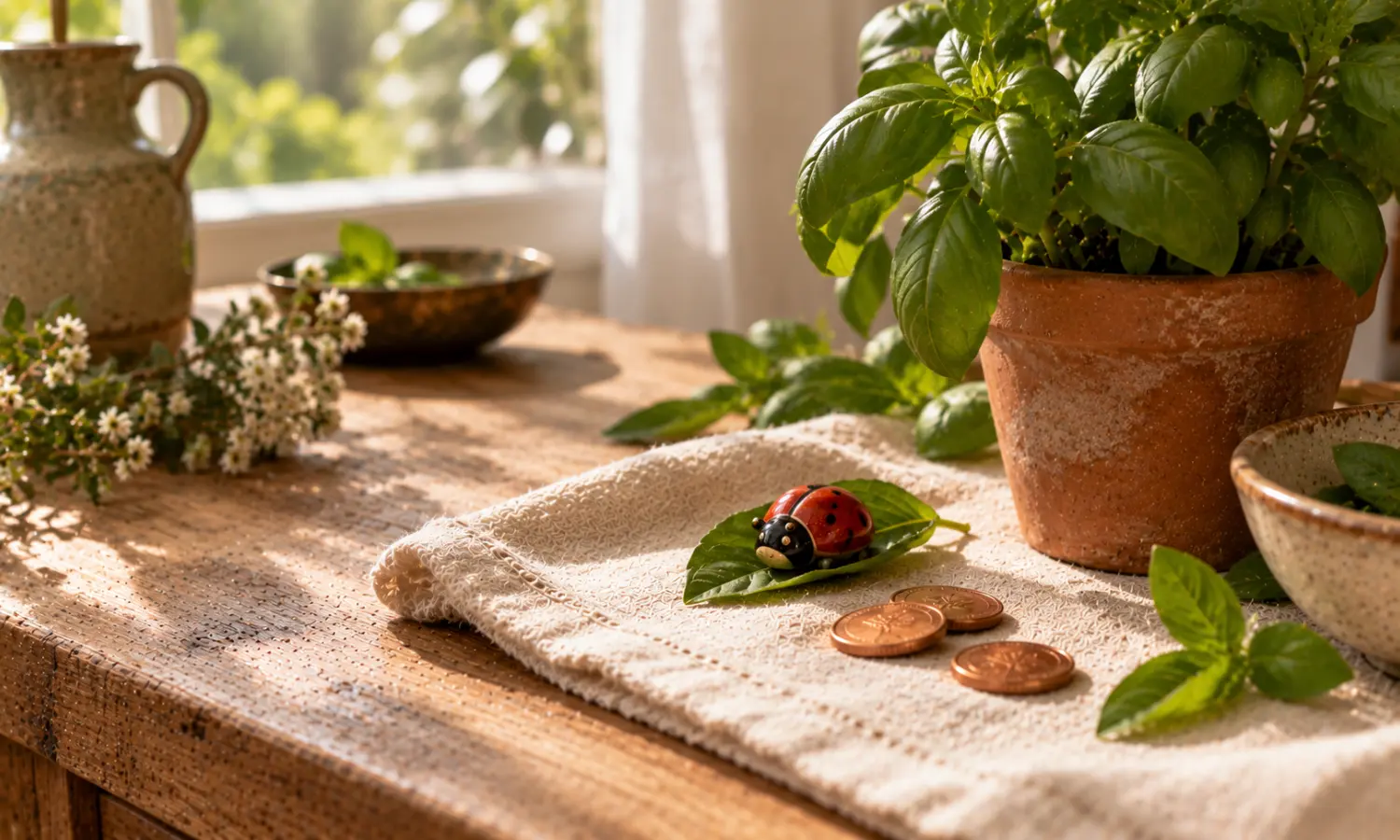

Ladybug Meaning: Why Ladybugs Are Considered Good Luck
Why the little red beetle became a good luck symbol, what its spots and colors are said to mean, and how people honor it today.
Share your love
In folklore, the ladybug meaning is almost always positive: a ladybug landing on you is widely considered a sign of good luck, a wish about to come true or a season of protection and ease. Across Europe and North America, the little red beetle has been welcomed as a friendly visitor for generations.
Part of that reputation is practical. Ladybugs eat aphids and other soft pests, so farmers and gardeners have long seen them as helpers. Over time, that usefulness blended with religious and folk stories, and the ladybug became a charm in its own right.
In this guide we look at where the belief comes from, what spots and colors are said to mean, how people use the symbol today and a few misconceptions worth clearing up.
This is folklore and personal belief, not a predictor of money or events; nothing here guarantees luck or financial results. We share these traditions because they are meaningful to many people and can be a pleasant prompt for reflection.
Ladybug meanings at a glance
| Variant | Common meaning | Tip |
|---|---|---|
| Ladybug lands on you | Good luck, a wish granted, a happy surprise | Pause, make a quiet wish and let it fly off on its own |
| Red ladybug | Protection, love, warmth | Treat it as a reminder of what you care about |
| Orange or yellow ladybug | Creativity, optimism, fresh energy | A nudge to start the project you keep postponing |
| Black with red spots | Change, resilience, transformation | Reflect on a habit you are ready to update |
| Many spots | In some tellings, more months of good fortune | Enjoy the story; do not count it as a forecast |
| Ladybug in the house | A welcome visitor, often linked to home blessings | Gently carry it outside to a plant |
Key takeaways
- Ladybugs are linked to good luck in European and North American folklore.
- Many of the stories connect the beetle to the Virgin Mary and to protecting crops.
- Spot counts and colors carry modern symbolic meanings, not reliable predictions.
- Harming a ladybug is traditionally considered bad luck, so people release them gently.
- The symbol works best as a reminder of patience and gratitude.
Where the ladybug’s lucky reputation comes from
The English name itself tells part of the story. “Ladybird” in Britain and “ladybug” in the United States both refer to “Our Lady”, a title for the Virgin Mary. In several European languages the insect carries a similar religious name, such as Marienkäfer in German and “bête à bon Dieu”, roughly “the good Lord’s creature”, in French.
A popular story, told in slightly different forms, says that medieval farmers whose crops were being eaten by pests prayed to Mary for help. Soon after, swarms of small red beetles arrived and cleared the plants. The farmers saw them as an answer to prayer and named them in her honor.
Folk retellings add symbolic details. The red wing covers are often described as representing Mary’s cloak, and the seven black spots seen on a common European species are linked to her seven joys and seven sorrows. These associations are devotional and traditional rather than historical record, but they explain why the beetle feels gentle and protective to many people.
What a ladybug is said to mean
The most common meaning is simple good luck. If a ladybug lands on you, tradition says you should let it walk and fly away on its own, sometimes after making a wish. Brushing it off or harming it is said to undo the luck.
Other meanings appear in modern spiritual writing. Ladybugs are often described as messengers of patience, because they arrive quietly and leave when they are ready. Some people read a visit as encouragement to slow down, trust timing and stop forcing an outcome.
In love folklore, a ladybug landing on a young woman’s hand was once said to point toward a coming romance. In some tellings, the direction it flew showed where a future partner would come from. These are playful customs, the kind of thing people enjoy rather than rely on.
Variations by color, spots and setting
Spots
Counting the spots is one of the best-known customs. Depending on the region and the storyteller, the number of spots is said to equal the months of good luck ahead, the number of children a person will have or the years until a wish is fulfilled. Different species have different spot patterns, so this is very much folklore.
Colors
Most people picture a red ladybug, which is commonly associated with love, protection and luck. In contemporary symbolism, orange and yellow beetles are linked to creativity and optimism, while black ladybugs with red spots are linked to transformation. These color meanings are recent and vary from writer to writer, so take them as gentle themes rather than rules. If color symbolism interests you, our guide to the colors people associate with money covers green, gold and red in more depth.
At home and in the garden
A ladybug indoors is usually read as a blessing on the household. In the garden, it is both a symbol and a real helper, since ladybugs feed on aphids. Many gardeners consider their arrival a sign that the plants are healthy enough to attract good visitors.
How people use the ladybug symbol today
Today the ladybug shows up on baby clothes, greeting cards, charms and garden ornaments. It is one of the friendliest symbols on our list of good luck symbols from around the world, partly because it carries no frightening side.
Some people keep a small ladybug charm in a wallet or on a keychain as a reminder of patience and gratitude. You will find it alongside four-leaf clovers and horseshoes in many collections of lucky symbols for money. Others plant flowers that welcome ladybugs, such as dill, fennel or marigolds, as a quiet way of inviting good things to the garden.
If you want to honor the symbol, the kindest approach is the traditional one: let any ladybug you meet go about its day. If one wanders indoors, guide it onto a leaf or a piece of paper and carry it outside.
Misconceptions worth clearing up
The first is that a ladybug visit predicts money. Folklore talks about luck and wishes, but it does not promise a windfall, and no symbol can stand in for financial planning.
The second is that every red-and-black beetle is the same. In North America, the Asian lady beetle is common and sometimes gathers indoors in autumn. It looks similar, and people often call it a ladybug too. The folklore does not depend on species, but if you have a large indoor gathering, a gentle cleanup or advice from a local pest professional is more useful than reading it as an omen.
The third is that killing a ladybug brings serious misfortune. Traditional sayings do call it bad luck, but there is no need for worry or guilt if one is accidentally harmed. Folklore is best enjoyed lightly.
A practical pairing
The ladybug is often read as a symbol of patience and good timing. Pair that with one patient money action this week: set up a small automatic transfer into savings, even a modest amount, and leave it alone for a month. It is the financial version of letting the ladybug fly away on its own.
If you enjoy a reflective touch, you could keep a small ladybug charm near your budget notebook as a reminder that steady habits matter more than sudden luck.
Common questions
Is a ladybug good luck?
In most European and North American folk traditions, yes. A ladybug landing on you is commonly treated as a sign of good luck or a wish coming true. It is a cultural belief rather than a prediction, but many people find it a pleasant reminder to pause and be grateful.
What does it mean spiritually when a ladybug lands on you?
Spiritually, it is often described as a message of patience, protection and trust in timing. Some people make a wish, others simply take it as encouragement. The common thread is to let it leave on its own.
What does a ladybug in the house mean?
A ladybug indoors is traditionally read as a blessing on the home. If you find several, especially in autumn, they may be sheltering from the cold. Carry them outside gently.
What does the number of spots on a ladybug mean?
In folklore, spots are said to show months of good luck, the number of children ahead or the years until a wish comes true, depending on who tells the story. These meanings vary widely and are best enjoyed as tradition.
Continue your practice
For more charms with friendly reputations, see our list of the most powerful good luck charms for money. You may also enjoy symbols of abundance and what they represent and our wider guide to symbols of prosperity across cultures.