
Money Spell Guide
Prosperity rituals, luck symbols & intention
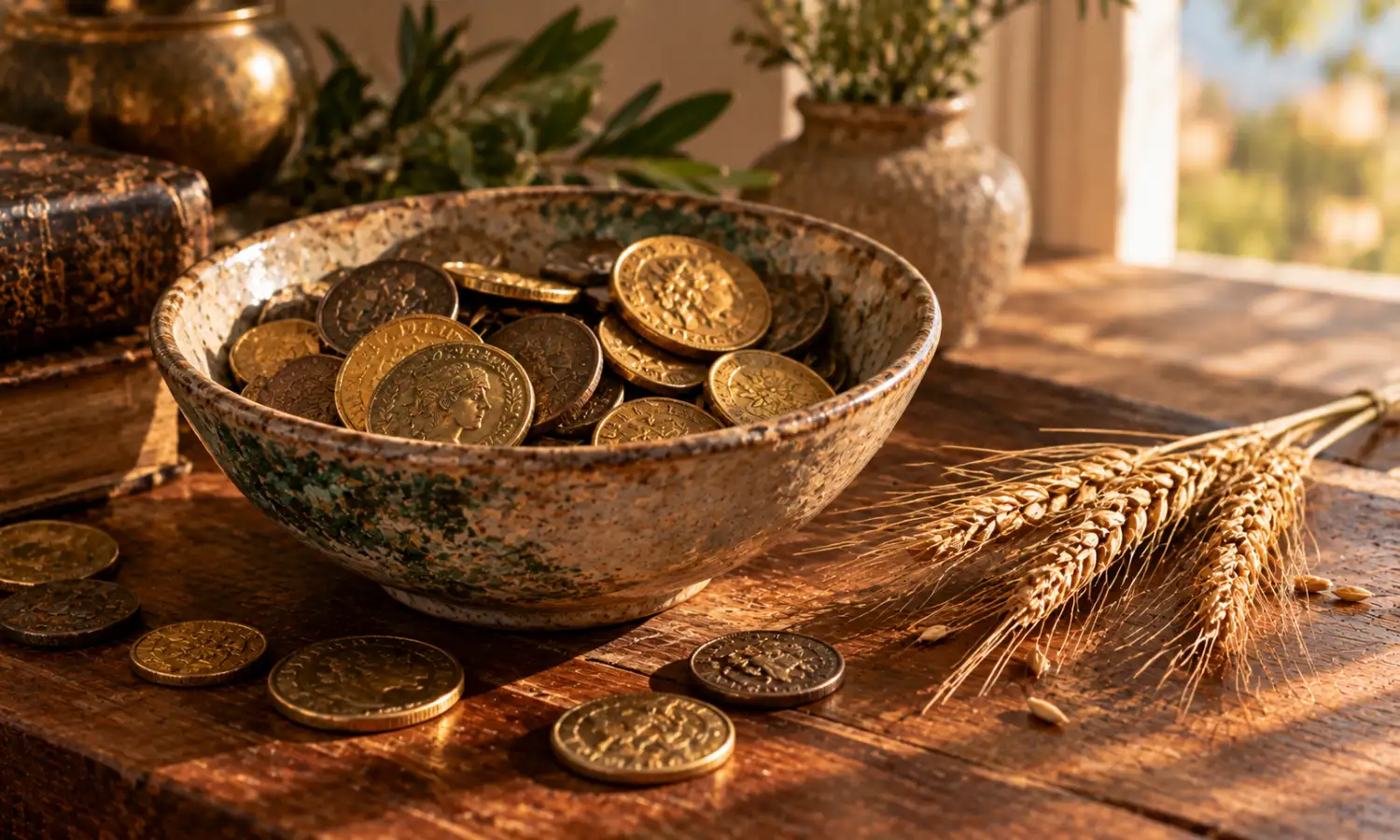

Symbols of Prosperity: 25 Signs of Wealth Across Cultures
A calm guide to 25 symbols of prosperity from around the world, what each one represents, and how people keep them at home.
Share your love
Symbols of prosperity are objects, animals, plants and signs that different cultures have come to associate with wealth, plenty and a comfortable life. Some are ancient, like wheat and the cornucopia. Others are more recent, like the piggy bank or the waving cat in a shop window.
People keep these symbols for many reasons: as decoration, as a nod to family heritage, or as a small daily reminder of what they are working toward. This list gathers 25 of the most recognized symbols of prosperity, with a short note on where each one comes from and what it is said to represent.
Keeping a symbol is a reflective, cultural practice rooted in folk tradition; it is not a proven method for producing money and nothing here guarantees financial results.
Prosperity symbols at a glance
| Symbol | Origin | What it is said to mean | Where people keep it |
|---|---|---|---|
| Chinese coins with a square hole | Imperial China | Heaven and earth, wealth that circulates | Tied with red thread in a purse or near the entrance |
| Money frog (Jin Chan) | Chinese folklore | A guardian that carries wealth home | Inside the front door, facing into the room |
| Beckoning cat (maneki-neko) | Japan | Invites customers (left paw) or money (right paw) | Shop window or counter |
| Cornucopia | Greek myth | Seasonal, shared plenty | The table, especially at harvest time |
| Jade plant and money tree | Feng shui | Steady growth, coin-shaped leaves | Wealth corner or shop counter |
| Horseshoe | Europe and the United States | Luck that is held and kept | Above a door, open end up |
Key takeaways
- This is a tour of 25 wealth symbols from East Asia, Europe, India, the Middle East and the Americas.
- Most come from harvest customs, language puns, religious iconography or merchant folklore.
- People keep them on desks, by front doors, in wallets or at the center of a quiet intention practice.
- No symbol produces money on its own; it is a reminder, not a mechanism.
- Pick one, give it a specific job and pair it with a real money habit such as an automatic savings transfer.
Coins, metals and money itself
1. Chinese coins with a square hole
Old Chinese cash coins, round with a square center, are often described as representing heaven (the circle) and earth (the square). In feng shui they are commonly tied together with red thread in sets of three and kept in a purse or near the entrance.
2. Gold
Gold has stood for lasting value in almost every culture that has worked it. Beyond jewelry, the color itself is used in decor and ritual to represent abundance that does not tarnish.
3. The gold ingot (yuanbao)
The boat-shaped ingot was a form of currency in imperial China. Replica ingots appear at Lunar New Year, often arranged in bowls or carried in the mouth of the money frog.
4. The piggy bank
Pigs are linked to plenty in German and Scandinavian folklore, where a “lucky pig” is still gifted at New Year. The piggy bank turns that association into a habit: a visible place for savings to accumulate.
5. The number 8
In Mandarin and Cantonese, the word for eight sounds close to a word meaning to prosper. That is why phone numbers, license plates and addresses with 8 carry a premium in many Chinese communities. We cover more of these language-based signs in our guide to Chinese symbols for prosperity.
Animals associated with wealth
6. The money frog (Jin Chan)
A three-legged toad sitting on coins, usually with one in its mouth. Practitioners describe it as a guardian of wealth that faces inward from the door, as if bringing money home.
7. The beckoning cat (maneki-neko)
Japan’s waving cat is a fixture of shops and restaurants. A raised left paw is often said to invite customers, while a raised right paw is said to invite money.
8. The dragon
In Chinese tradition the dragon is a benevolent symbol of strength, authority and good fortune rather than a monster. It is frequently paired with a pearl, read as wisdom or prosperity.
9. Koi and carp
Carp swimming upstream represent perseverance, and the Chinese word for fish sounds like the word for surplus. Paintings of nine koi are a popular prosperity motif.
10. The elephant
In Indian and Southeast Asian traditions the elephant stands for stability, wisdom and abundance. Figurines with the trunk raised are commonly placed facing the entrance.
11. The bee
Bees have long symbolized industry, cooperation and sweetness earned through steady work. Honey jars appear in several folk practices as a symbol of a “sweetened” path.
12. The rooster
From Portugal’s Rooster of Barcelos to Chinese zodiac lore, the rooster is linked with honesty, early rising and the rewards of diligence, which is why it often appears in kitchens.
Plants and harvest symbols
13. Wheat and grain
Before coins, wealth was measured in harvests. A bundle of wheat, the sheaf, remains one of the oldest signs of plenty and appears on coats of arms and currency worldwide. Harvest imagery overlaps heavily with the symbols of abundance we cover separately.
14. The cornucopia
The horn of plenty comes from Greek myth and overflows with fruit and grain. It is the image most Americans meet at Thanksgiving, a reminder that abundance is often seasonal and shared.
15. Pomegranate
With its hundreds of seeds, the pomegranate stands for fertility and abundance in Jewish, Persian, Greek and Armenian traditions. It is often set on the table at new year celebrations.
16. Oranges and tangerines
Their color recalls gold, and in Cantonese the word for tangerine sounds like the word for luck. Bowls of citrus are exchanged and displayed around Lunar New Year.
17. The jade plant
Its round, coin-like leaves earned the jade plant the nickname “money plant.” It is a common housewarming gift and a frequent resident of shop counters.
18. The money tree (Pachira)
Pachira aquatica, usually sold with a braided trunk, is one of the most popular prosperity plants in feng shui. Its five-leaf clusters are sometimes read as the five elements.
19. The acorn
A small seed that becomes an oak, the acorn is a European emblem of potential and patient growth. Carrying one in a pocket is an old English good-luck custom.
20. The four-leaf clover
Rare by nature, the four-leaf clover is Ireland’s best-known luck symbol. The four leaves are often said to stand for faith, hope, love and luck. It belongs to the wider family of good luck symbols that are about fortune in general rather than money alone.
Sacred and household symbols
21. Lakshmi and the lotus
In Hindu tradition Lakshmi is the goddess of wealth and well-being, usually shown seated on a lotus with gold coins flowing from her hand. Her image is central to Diwali.
22. Budai, the laughing Buddha
Based on a Chinese monk of folklore, the cheerful figure with a sack is associated with contentment and plenty. He is distinct from the historical Buddha, a point worth respecting.
23. The Fu character
The character for blessing or good fortune is pasted on doors at New Year, often upside down, because “upside down” and “arrives” sound alike in Mandarin.
24. The horseshoe
Iron, a crescent shape and a working animal all contribute to the horseshoe’s reputation across Europe and the United States. Hung open-end up, it is said to “hold” the luck.
25. The key
Keys represent access, ownership and opened doors. Antique keys are a popular charm for people hoping for a home purchase or a new opportunity.
A practical pairing
Choose one symbol from this list that genuinely speaks to you and give it a specific job. If you pick the piggy bank, open an automatic transfer of even ten dollars a week into a separate savings account the same day. If you pick the key, write down the one phone call or application that moves your housing or career goal forward, and make it this week.
The symbol then becomes a cue. Each time you see it, it points back to a real action you have already taken, which is far more motivating than hoping it works on its own.
Common questions
What is the most common symbol of prosperity?
Gold and coins are the most universal, since they represent money directly. Among cultural symbols, the Chinese money frog, the beckoning cat and the cornucopia are probably the most widely recognized in the United States today.
Can I use a symbol from a culture that is not mine?
Many people do, and most of these objects are sold openly as gifts and decor. The respectful approach is to learn what the symbol means, use it as it is traditionally used, and avoid treating religious figures as mere ornaments.
Where should prosperity symbols be placed?
Feng shui practitioners usually suggest the entryway, the home office or the far-left corner of the home relative to the front door. We cover that in detail in our guide to the feng shui money corner.
Do prosperity symbols actually attract money?
There is no evidence that an object changes your finances by itself. What a symbol can do is keep a goal visible and prompt better decisions, which is where any real benefit comes from.
Continue your practice
If one of these symbols caught your attention, you might enjoy our walk-through of the feng shui money corner or our closer look at the money frog in feng shui. To turn a symbol into a routine, try the simple money ritual for beginners and our intention journaling for work and opportunity, or begin with Start Here.



