Money Spell Guide
Prosperity rituals, luck symbols & intention

How to Make a Money Bowl: A Step-by-Step Prosperity Practice
A step-by-step guide to the money bowl spell: what goes in it, where to keep it, and how to pair it with one real money action.
Share your love
A money bowl spell is a simple folk practice in which you fill a small dish with coins, dried herbs and a written intention, then keep it somewhere you will see it every day. It takes about twenty minutes to set up and costs almost nothing, because most of the ingredients are already in your kitchen or your pocket.
Versions of the money bowl appear in feng shui, hoodoo, kitchen witchcraft and plain family superstition. The common thread is the same: a visible container that holds a little of what you want more of, tended with care and attention.
This practice is a symbolic, reflective exercise rooted in folk tradition; it is not a proven method for producing money and nothing here guarantees financial results.
Money bowl versions at a glance
| Version | What goes in | Where it sits | Upkeep |
|---|---|---|---|
| Basic bowl from this guide (about 20 minutes) | Small bowl, coins, a few dried herbs, a written intention; optional crystal | A spot you pass daily: desk, hallway shelf, entryway table | Dust weekly, add a coin for each good money move, about 2 minutes a week |
| Feng shui wealth bowl | Coins, gold-colored objects, sometimes semi-precious stones | The wealth corner, far left of the home from the front door | Keep it clean and uncluttered; refresh each season |
| Southern folk dish | Coins and dried herbs | A dresser or near the door | Replace herbs when they lose their scent |
| Kitchen-witch bowl | Whatever is in the spice rack: cinnamon, bay, basil, cloves, rice | Kitchen shelf or counter | Swap herbs every one to three months |
| Savings-deposit variation | Same as the basic bowl | Anywhere visible | Empty the coins into a savings deposit at the end of each season and start again |
Key takeaways
- Setup takes about 20 minutes and tending takes about 2 minutes a week.
- You need a small bowl, coins, a few dried herbs or spices, paper and a pen; a crystal or small plant is optional.
- It suits beginners who want a low-effort daily reminder rather than an elaborate ritual.
- The purpose is to hold one clear financial intention in plain sight and anchor it to a real habit.
- The bowl does not produce money; pair it with a monthly budget review so the reminder points at something real.
What a money bowl is and where the idea comes from
The money bowl is often described as a cousin of the money jar. Where a jar is sealed and set aside, a bowl stays open. Practitioners say this openness matters: the bowl is meant to “receive,” and you are meant to keep adding to it.
In feng shui, a wealth bowl is traditionally filled with coins, gold-colored objects and sometimes semi-precious stones, and placed in the home’s wealth area. In Southern folk magic, dishes of coins and herbs sit on dressers or near the door, and a sweetened cousin, the honey jar money spell, comes from the same tradition. In modern kitchen-witch practice, the ingredients are usually whatever is in the spice rack. None of these versions is more “correct” than another; pick the one that fits your home.
Choosing your bowl and ingredients
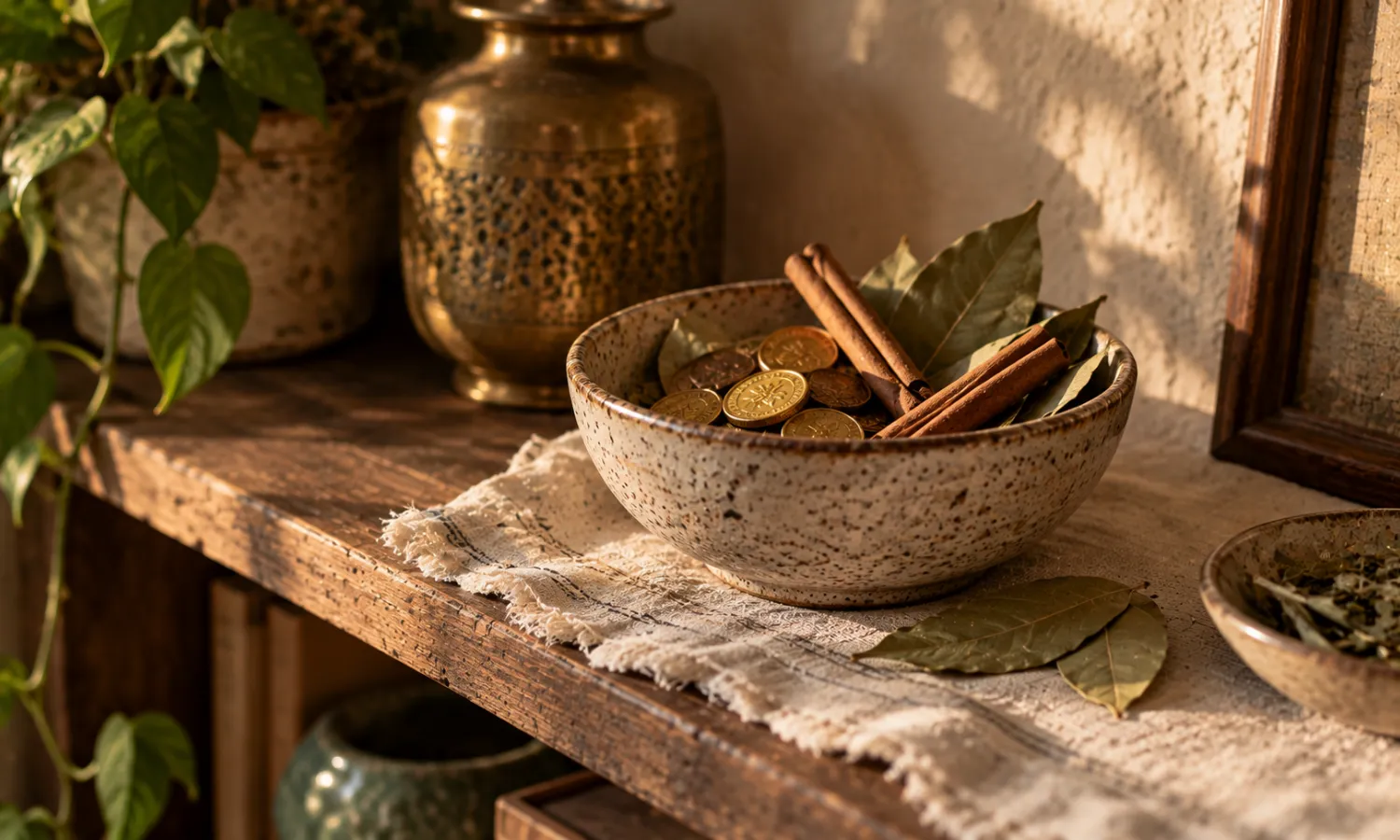
Use a bowl you like looking at. Ceramic, wood, brass and glass are all common. Many people prefer something small enough to sit on a shelf without being in the way.
Typical ingredients, with the meaning each tradition gives them:
- Coins: the obvious centerpiece. Many people use a mix of denominations, or a coin from the year they were born.
- Cinnamon sticks: commonly associated with warmth, speed and prosperity.
- Bay leaves: traditionally used for wishes and written intentions.
- Dried basil or mint: both are described as money herbs in European and American folk practice.
- Rice or whole cloves: symbols of plenty and protection.
- A citrine, pyrite or green aventurine tumble: optional, but popular.
These herbs and spices are handled, not eaten, in this practice. Keep the bowl away from pets and small children, and skip any ingredient that triggers allergies in your household.
How to make a money bowl, step by step
- Clean the bowl. Wash and dry it. Some people add a pinch of salt and wipe it out as a symbolic clearing before they begin.
- Write your intention. On a small slip of paper, write one specific, honest sentence. “I pay off my credit card by March” works better than “I want to be rich.” Fold it toward you.
- Lay the base. Put the folded paper at the bottom, then a thin layer of rice or a few bay leaves over it.
- Add the coins. Place them one at a time. Many practitioners name something they are grateful for with each coin, which keeps the mood grounded rather than grasping.
- Add herbs and spices. Tuck in a cinnamon stick, a few cloves, a pinch of dried basil. Keep it tidy; this is decor as much as ritual.
- Top it off. If you are using a crystal or a small gold-colored object, set it on top where you can see it.
- Place the bowl. Choose a spot you pass daily: a desk, a hallway shelf, the entryway table. Feng shui practitioners favor the far-left corner of the home from the front door.
- Say it out loud. Read your intention once, quietly. That is the whole “spell.”
If you want to include a candle, keep it in a proper holder on a heat-safe surface, well away from the dried herbs, and never leave it burning unattended. A battery candle is a sensible alternative near loose leaves and paper. If you would like the candle to carry its own intention, our green candle money spell walks through that step safely.
Tending and refreshing your bowl
The bowl works as a reminder only if you keep interacting with it. A common rhythm is to add a coin every time you do something good for your finances: a transfer to savings, a bill paid early, a no-spend day. Over a month the bowl visibly fills, which is quietly encouraging.
Dust it weekly. Replace herbs when they lose their scent, usually every one to three months. When your written intention comes true or expires, take the paper out, thank it, recycle it and write a new one. Some people empty the coins into a savings deposit at the end of each season and start again, which is a nice way to make the symbol literal.
Common mistakes
Vague intentions. A bowl dedicated to “abundance” gives you nothing to act on. Name an amount, a debt, a client or a date, the same rule that runs through our introduction to money magic.
Treating it as a bank. Dipping into the bowl for parking meters undermines the whole point. If you need the coins, that is fine, but make it a deliberate withdrawal rather than a habit.
Letting it go stale. A neglected bowl with dusty leaves sends the opposite message. If you notice you have stopped seeing it, move it to a new spot.
A practical pairing
The money bowl pairs naturally with a monthly budget review. Set a recurring reminder for the day you refresh the bowl, and spend fifteen minutes with your bank statements: list income, fixed costs and the three biggest variable expenses. Then decide one adjustment for the coming month.
Write that adjustment on the back of your intention slip before it goes back into the bowl. The ritual gives the review a start and an end, and the review gives the ritual something real to hold.
Common questions
What do you put in a money bowl?
Coins, a written intention and a few dried herbs or spices are the core. Cinnamon, bay leaf, basil, mint, cloves and rice are the most common additions, and citrine or pyrite are popular optional extras.
Where should a money bowl be placed?
Anywhere you will see it daily. Feng shui tradition suggests the wealth corner, usually the far-left area of the home relative to the front door, or the home office. Avoid bathrooms and spots directly on the floor.
How long does a money bowl spell take to work?
There is no timeline, because the bowl itself does not produce money. What people report is a shift in attention: they notice spending, pursue opportunities and stick to savings goals more consistently because the reminder is in front of them.
Can I use paper money instead of coins?
Yes. A folded bill works, and some people like including one foreign note from a place they hope to visit. Coins are traditional mostly because they are easy to add one at a time.
Continue your practice
If you enjoy the money bowl, the money jar spell is its sealed cousin, and our feng shui money bowl guide covers placement in more depth. For the written-intention side, see the bay leaf intention ritual without burning and our intention journaling for work and opportunity. New here? Start Here.