
Money Spell Guide
Prosperity rituals, luck symbols & intention
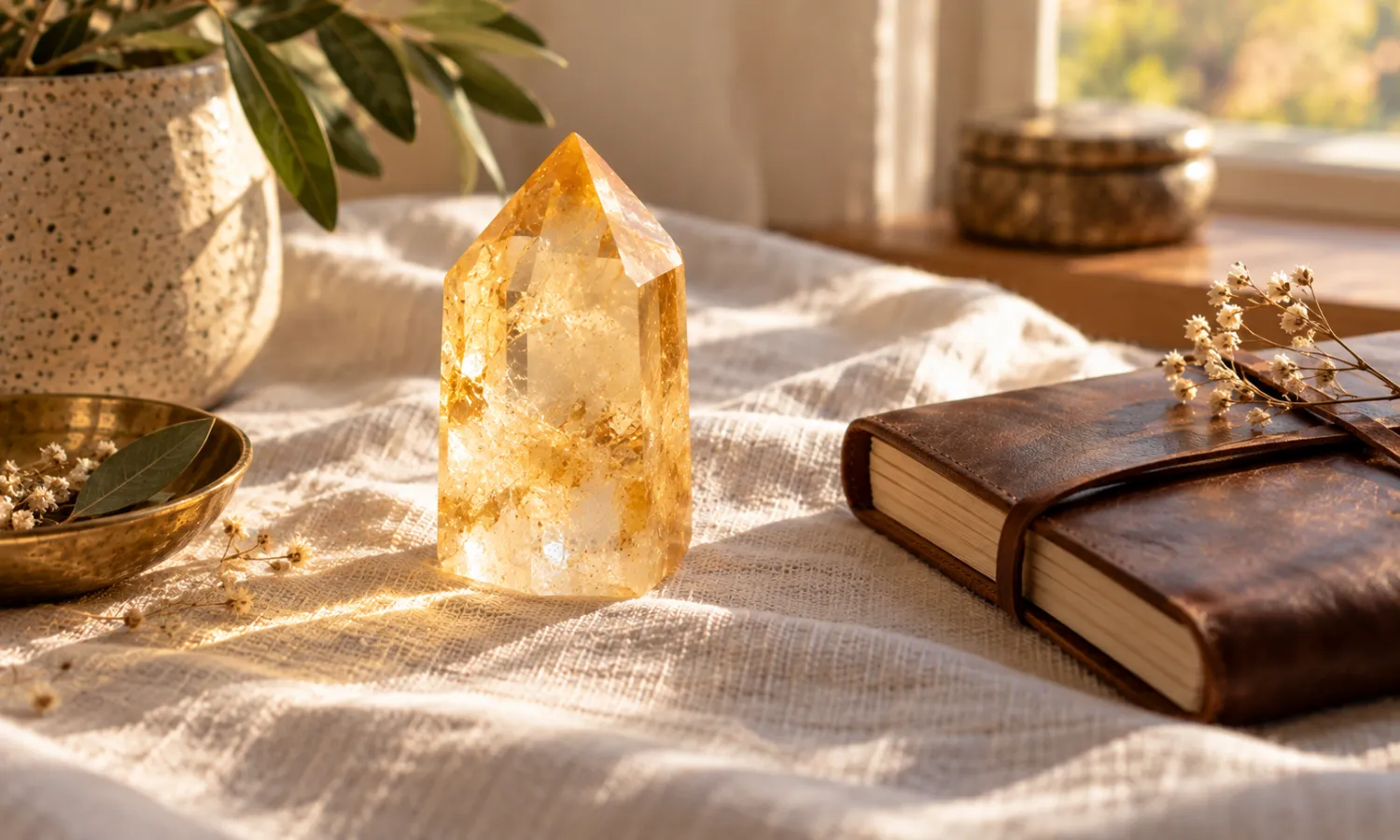

Citrine for Wealth: Meaning, Uses and How to Keep It in Your Space
Citrine for wealth: the merchant's stone tradition, natural versus heated citrine, where to keep it at home or work, and simple care.
Share your love
The citrine crystal for wealth is one of the most popular stones in any crystal shop, and its nickname, the merchant’s stone, tells you why. Citrine is a yellow-to-amber variety of quartz, and its sunny color has been associated with abundance, optimism and success in business for as long as crystal meanings have been written down.
People keep citrine in cash drawers, on desks, in wallets and in money bowls. This guide covers what practitioners say it represents, how to tell natural citrine from the heat-treated amethyst that is often sold under the same name, where to place it in your home, and how to care for it.
Working with citrine is a symbolic, reflective practice rooted in folk and crystal tradition; it is not a proven method for producing money and nothing here guarantees financial results.
Citrine placements at a glance
| How people use it | Where | Best form | Keep in mind |
|---|---|---|---|
| Cash drawer or wallet | Where money is kept | Small tumbled stone or flat worry stone | Raw points scratch cards and tear fabric |
| On the desk | Back-left corner, echoing the wealth area | Point or small cluster | Keep it out of direct sun |
| Money bowl or jar | On top of coins, cinnamon and a written intention | Tumbled piece | Standard companion to pyrite and green aventurine |
| Held during intention-setting | In the hand while writing a goal or saying an affirmation | Any smooth piece | A short pause, not a ritual on its own |
| As jewelry | Ring or pendant | Faceted stone; November birthstone | Easy way to keep the reminder close |
| Wealth corner | Far-left area of the home from the front door | Beside a healthy plant | Indirect daylight so the color stays true |
Key takeaways
- Citrine is yellow quartz, pale lemon to deep amber; much of what is sold is heat-treated amethyst.
- Natural stones are pale and evenly colored; heated ones show orange tips and a white base.
- It comes mainly from Brazil, Bolivia, Zambia, Madagascar and the Urals, and the name comes from the French word for lemon.
- It fades in prolonged sunlight, and the claim that it never needs cleansing is folklore.
- No stone changes your finances; pair it with a weekly revenue or savings check.
Why citrine is called the merchant’s stone
The nickname is often described as coming from a custom among shopkeepers of keeping a piece of citrine in the till or cash box. Whether that tradition is centuries old or a product of the twentieth-century crystal revival is hard to pin down, and honest sources say so. What is clear is that the association is now firmly established: ask for a prosperity stone in almost any shop and citrine is the first thing offered.
Part of the appeal is simply color. Yellow and gold are commonly associated with the sun, with harvest and with coins, and gold itself sits near the top of most lists of symbols of prosperity. Citrine’s warmth reads as cheerful rather than flashy, and practitioners frequently describe it as a stone of optimism and generosity rather than greed. In chakra-based systems it is tied to the solar plexus, the center associated with confidence and personal power, which overlaps neatly with the qualities you need to ask for a sale or a raise.
Natural citrine versus heated amethyst
This is the part most buyers do not know. Natural citrine is relatively uncommon and tends to be a pale, smoky yellow with even color throughout. The bright orange, burnt-looking clusters with white bases that fill shop shelves are usually amethyst that has been heated until it turns golden. Both are quartz. Both are real crystals. But they are not the same stone, and prices should reflect that.
Signs of heated material include a strong orange-to-brown color concentrated at the tips, a white or milky base, and the druzy cluster form typical of amethyst geodes. Natural citrine is more often sold as tumbled stones, points or faceted gems in soft lemon and champagne tones. Many practitioners say the symbolism is the same either way; others prefer natural stones on principle. Buy what you like, but know what you are buying.
How people use citrine for wealth
In the cash drawer or wallet. A small tumbled stone tucked where money is kept. This is the merchant’s stone custom in its most literal form.
On a desk. A point or small cluster near where you do your work, often in the back-left corner of the desk as a nod to the feng shui wealth area.
In a money bowl or jar. Citrine is a standard addition on top of coins, cinnamon and a written intention.
Held during intention-setting. Some people hold a piece while they write a financial goal or during a short morning affirmation practice.
As jewelry. Citrine is a November birthstone and a popular ring and pendant stone, so wearing it is an easy, low-key way to keep the reminder close.
Where to keep citrine in your space
Feng shui practitioners most often suggest the wealth corner: stand at your front door looking in, and the far-left area of the home is the one traditionally linked to prosperity. A citrine on a shelf there, beside a healthy plant, is a classic arrangement, and a pot of basil does double duty, as the basil money spell explains. The home office is the other obvious choice.
Shop owners often place a piece near the register or by the entrance, facing the room. At home, a bedside table is fine for people who like to see it first thing, though feng shui generally keeps “active” wealth symbols out of the bedroom.
Avoid a sunny windowsill. Citrine, especially heated material, can fade with prolonged exposure to direct sunlight. A spot with indirect daylight keeps the color true. Keep it off the floor and away from cluttered surfaces, which feng shui treats as stagnant.
Caring for citrine
Citrine is quartz, so it is durable and safe to rinse under cool water and dry with a soft cloth. Avoid hot water and sudden temperature changes, which can crack any quartz. Keep it out of direct sun for long stretches.
You will read that citrine “never needs cleansing.” That is a piece of modern crystal folklore rather than a property of the stone. If cleansing is part of your practice, a rinse, a few minutes in moonlight or a pass through incense smoke are the common methods. If you use incense, keep it in a proper holder on a heat-safe surface and never leave it burning unattended. Stones are handled and placed, never ingested or steeped in drinking water.
A practical pairing
The merchant’s stone belongs with a merchant’s habit. If you run any kind of business or side income, pair your citrine with a weekly revenue check: every Friday, with the stone on the desk, write down what came in, what is outstanding, and the one follow-up that would bring in the most money next week.
If you are salaried, use the same slot to check your savings rate or update your résumé. The point is a standing appointment with your finances. The stone just marks the chair.
Common questions
Where should I put citrine to attract wealth?
Tradition points to the cash drawer, the desk, or the wealth corner of the home, which is the far-left area as seen from the front door. Choose a spot out of direct sunlight so the color does not fade.
Does heated citrine work the same as natural citrine?
Most practitioners say the symbolic meaning is the same, since both are quartz. Some prefer natural stones. The honest answer is that neither has any demonstrated effect on finances; what matters is that the piece reminds you of your goal.
Can I keep citrine in my wallet?
Yes. A small, polished tumbled stone or a flat “worry stone” fits easily. Raw points can scratch cards and tear fabric, so stick to smooth pieces.
Which crystals pair well with citrine for money?
Pyrite and green aventurine are the classic companions, and the three are often sold together as a prosperity set. Clear quartz is sometimes added as a general amplifier in crystal practice. Our roundup of stones to attract money compares the full set.
Continue your practice
For citrine’s usual partner, read our guide to pyrite’s spiritual meaning, and for the wider family of stones, crystals for money. To put the stone inside a routine, try the simple money ritual for beginners and intention journaling for work and opportunity. New here? Start Here.



